
Most test weights are an afterthought – repurposed steel blocks, concrete slabs or kentledge pressed into service with whatever lashing straps are available.
They get the job done, but they create unnecessary risk, take longer to rig and rarely come with the documentation a properly conducted proof load test requires.
Our interlocking cast iron test weight system was designed specifically to address these problems. Every feature of the system – from the integrated lift points to the positive interlocking design, exists because there was a genuine health and safety reasons to do it better.
The problem with traditional test weights
Load testing is a well -established method of verifying the load bearing capability of structures and equipment. One of the most technically rigorous approaches involves the use of test weights arranged to replicate in -service loads as closely as possible – particularly useful when the system being tested requires the load to be mobile.
Historically however, little consideration was given to the features that made the testing process safer and more manageable on site. The result was a set of common problems that anyone who has worked with traditional test weights will recognise:
- Weights are difficult to handle and assemble.
- No dedicated lift points, or lift points that are inaccessible once weights are assembled.
- Weights supplied with no instructions, no lift plan and no documentation.
- A wide variety of weight sizes makes it difficult to produce drawings or plans for site use.
- Sharp or rough edges that damage rigging equipment.
- Weights are difficult to secure – high reliance on cargo lashing straps that offer little genuine restraint against a stack of sliding steel weights.
- Test weight cradles with unknown load history and poorly designed lifting eyes that are side-loaded in use.
- Poor marking of lifting and lashing points.
- Difficult to adjust weight and centre of gravity once assembled.
These are not minor inconveniences – they are fundamental design flaws that create real risk on site and make the testing process more difficult, slower and less well documented than it should be.
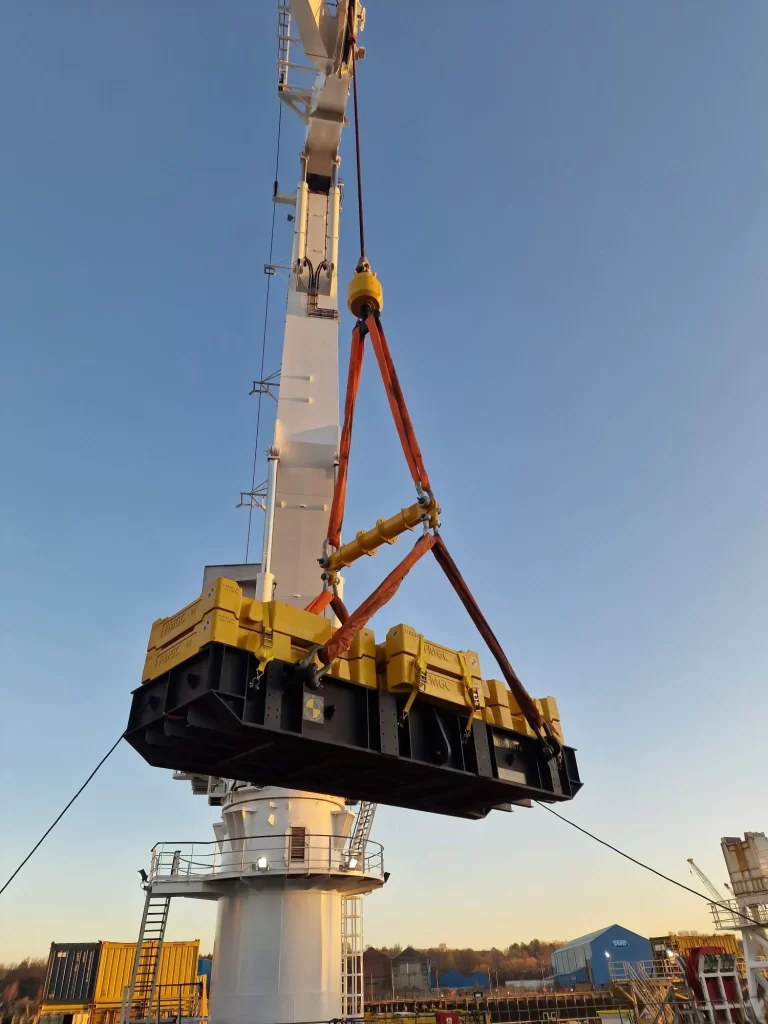
How our system was designed to solve these problems
Our system comprises interlocking 5Te and 1Te cast iron weights, designed and manufactured to work together as a complete, self securing assembly.
Every element of the design addresses one or more of the problems listed above.
The 5 Te weight
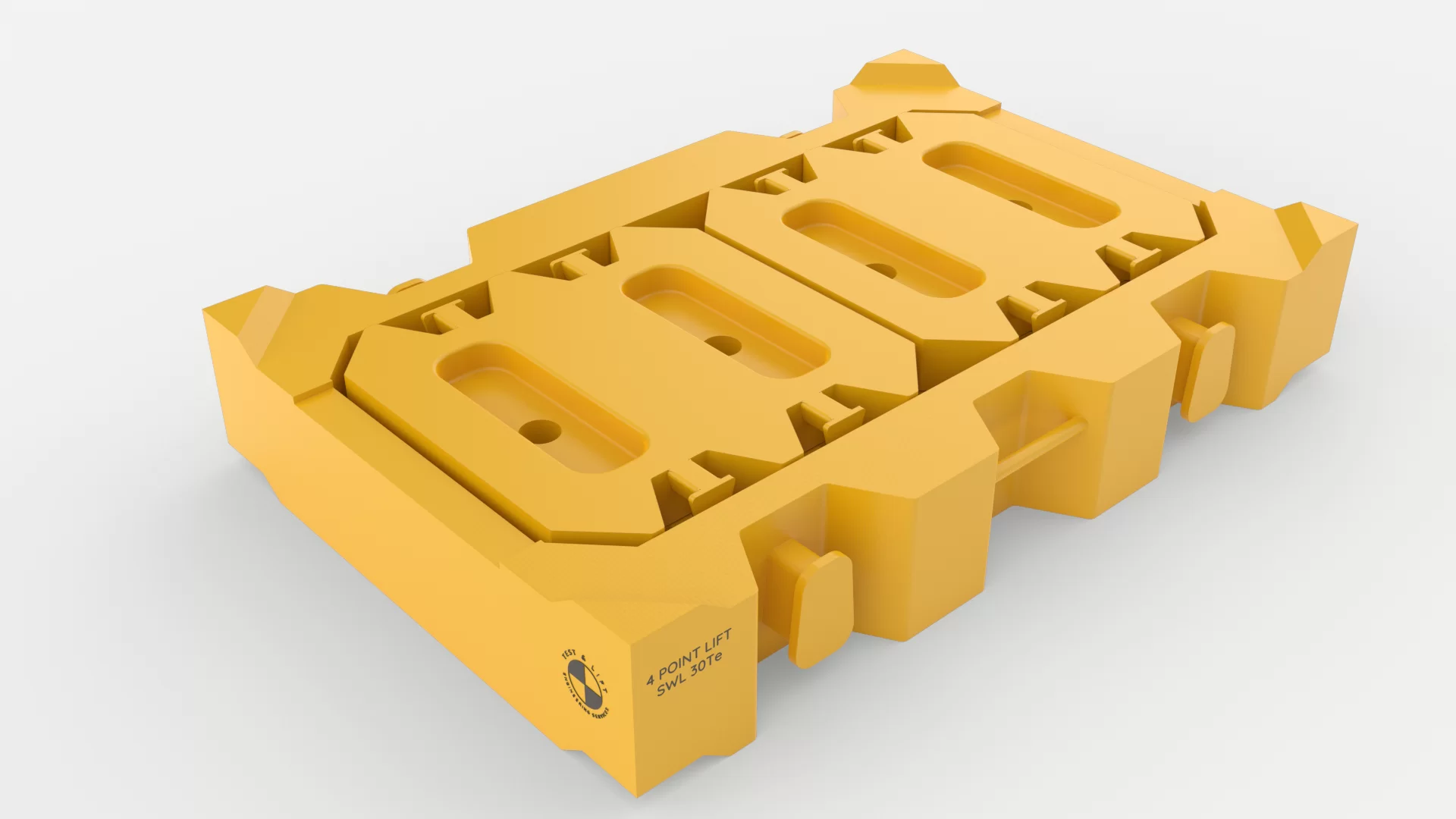
The 5Te weight is recessed to accept up to 4 off 1Te weights, giving an assembly weight of 9Te. The recess has three positions for the 1te weights – either end or centrally – allowing the centre of gravity to be adjusted when an odd number of 1te weights is used.
The 5Te weight has a positive interlocking design in all four corners that lock securely onto either a cradle or a lower weight in the stack, even when fully loaded with 1Te weights.
The 1 Te weight
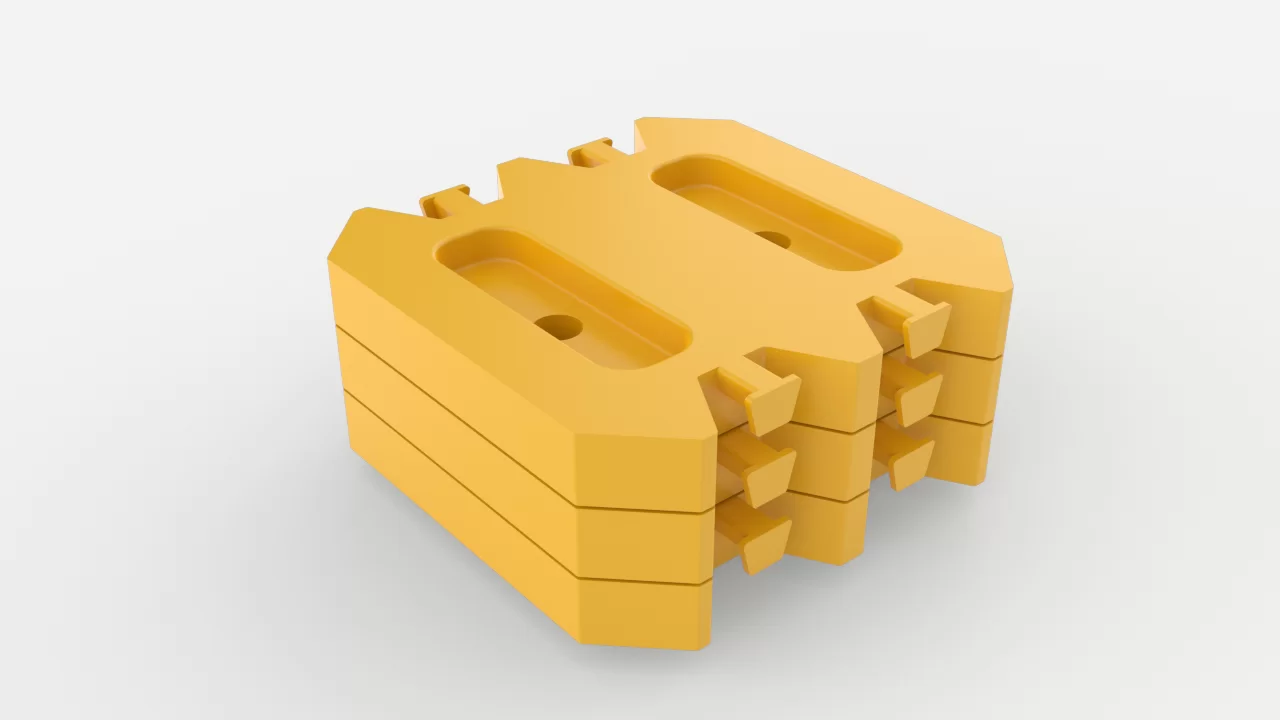
The 1Te weight slots inside the recess of the 5Te weight and requires no additional securing. Each 1Te weight is positively secured to the 1Te weight beneath it by positive interlocking design.
There is no need for lashing straps at any point in the assembly – the weights are mechanically locked to each other and to the 5Te weight at all times.
Integral lift points
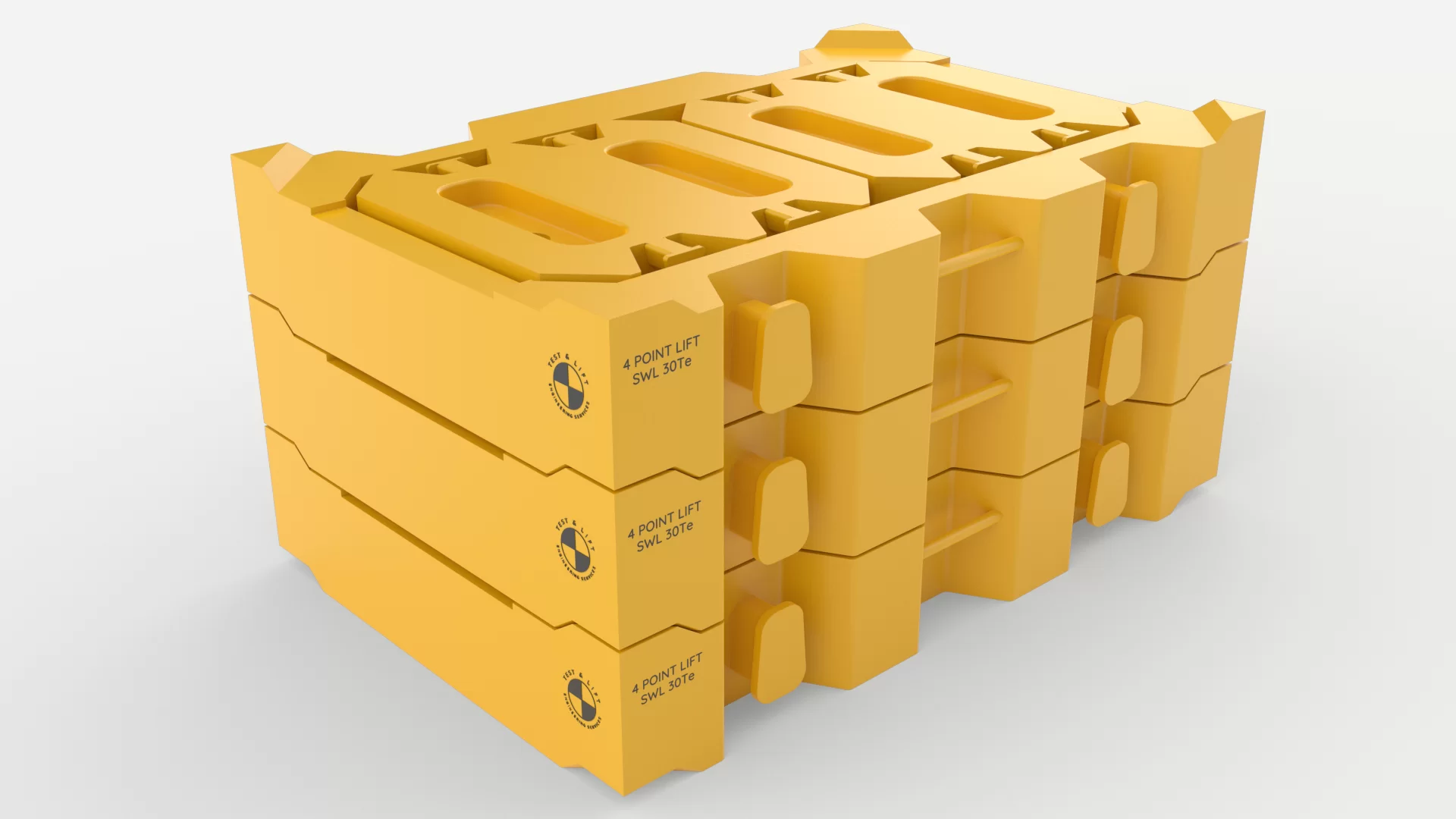
Every weight has integral lift points designed specifically
for the loads involved.
The 5Te weight lift points combined are rated to 30Te – this allows a stack of three full 9Te assemblies to be lifted together safely without the need for a cradle.
The 500kg, 250kg and 125kg weights lock into the recess of the 5Te weight or 1Te weight depending on your arrangement.
Designed to be within the overall dimensions of the 1Te weight. All come with a certified centre point lift.
Weight configuration options
Due to our innovative interlocking design, our test weights are available in three configurations to suit a wide range of proof load testing requirements:
Up to 3Te
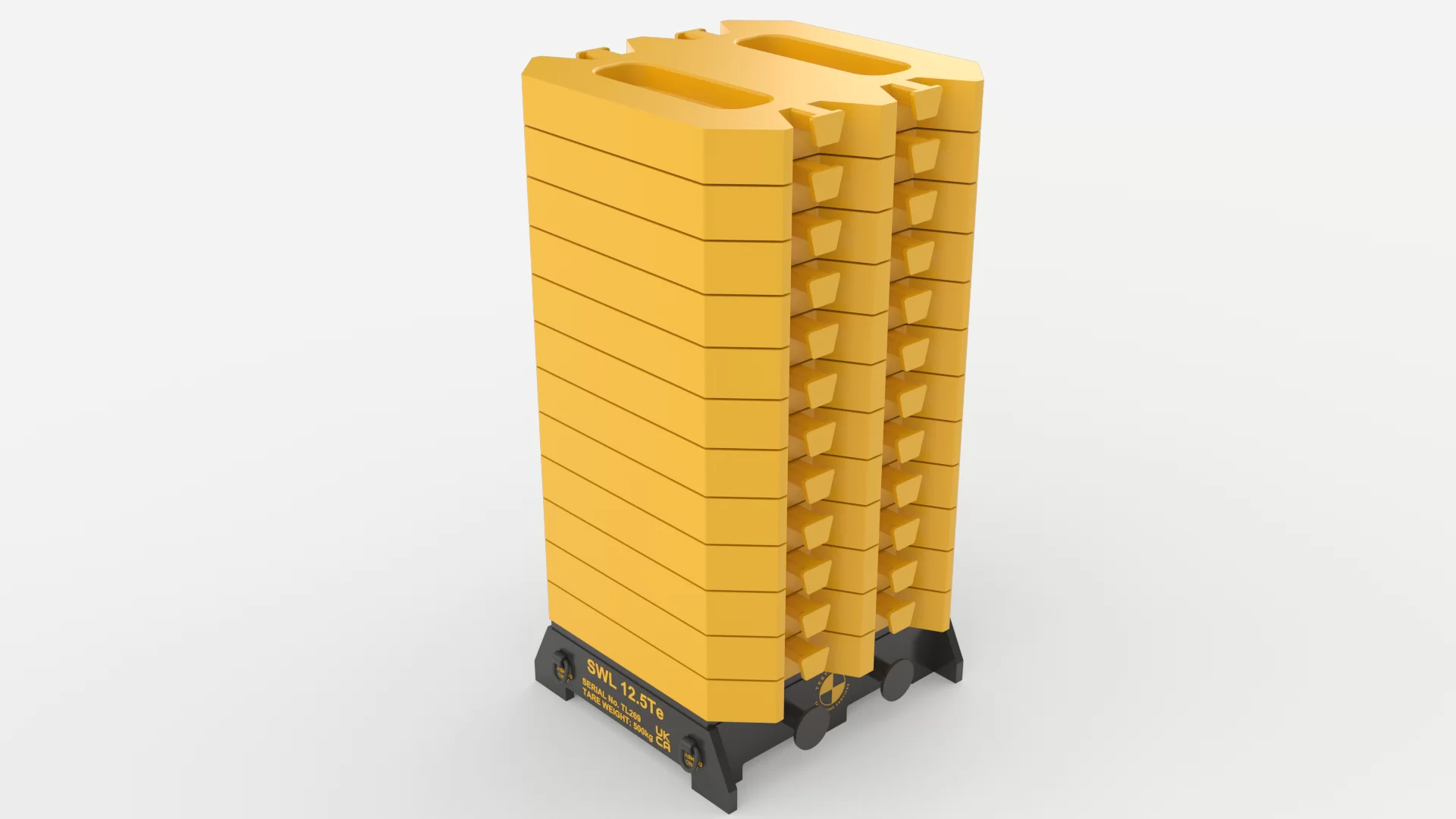
Up to 12.5Te
Up to 30Te
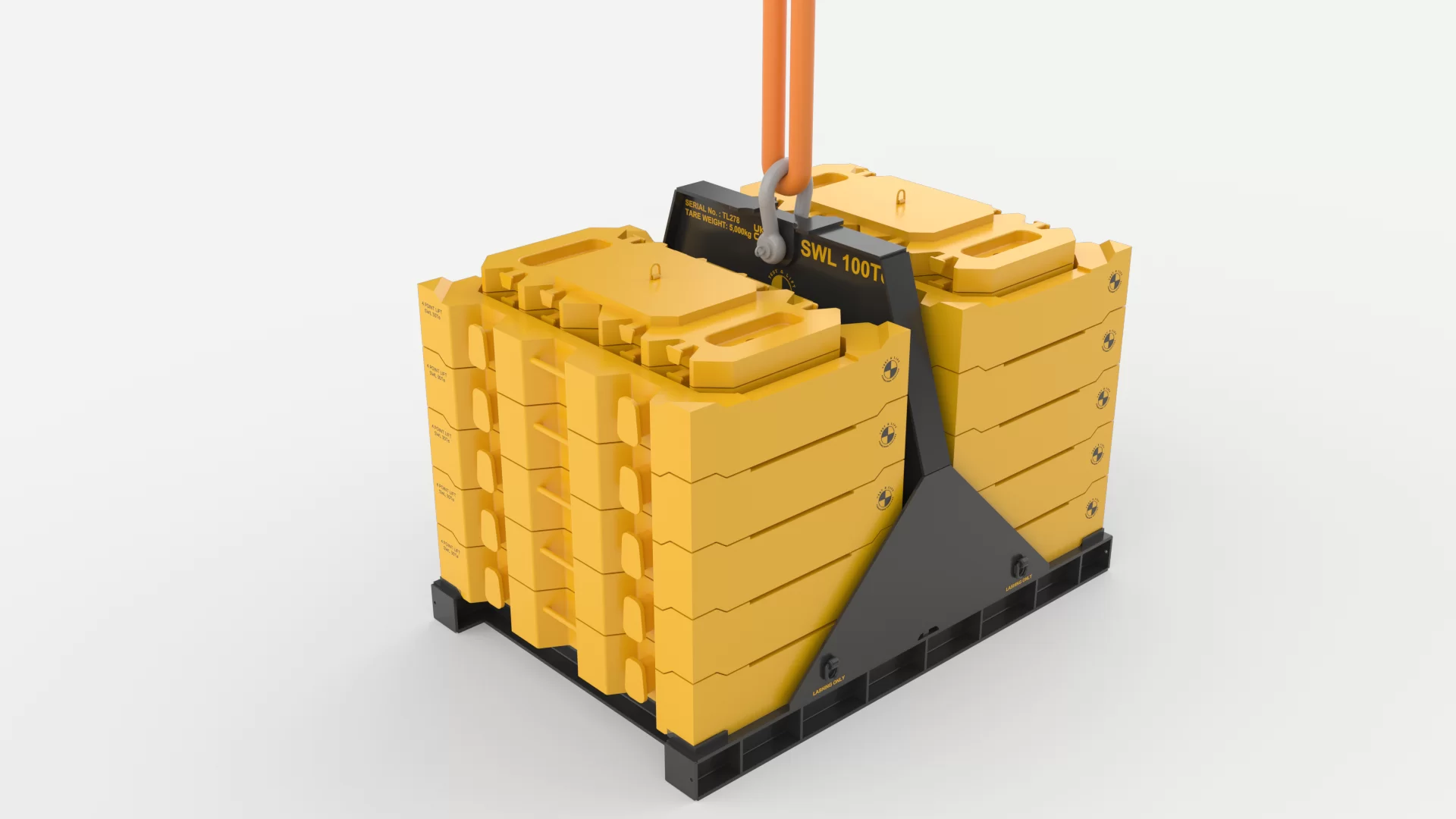
Up to 100Te
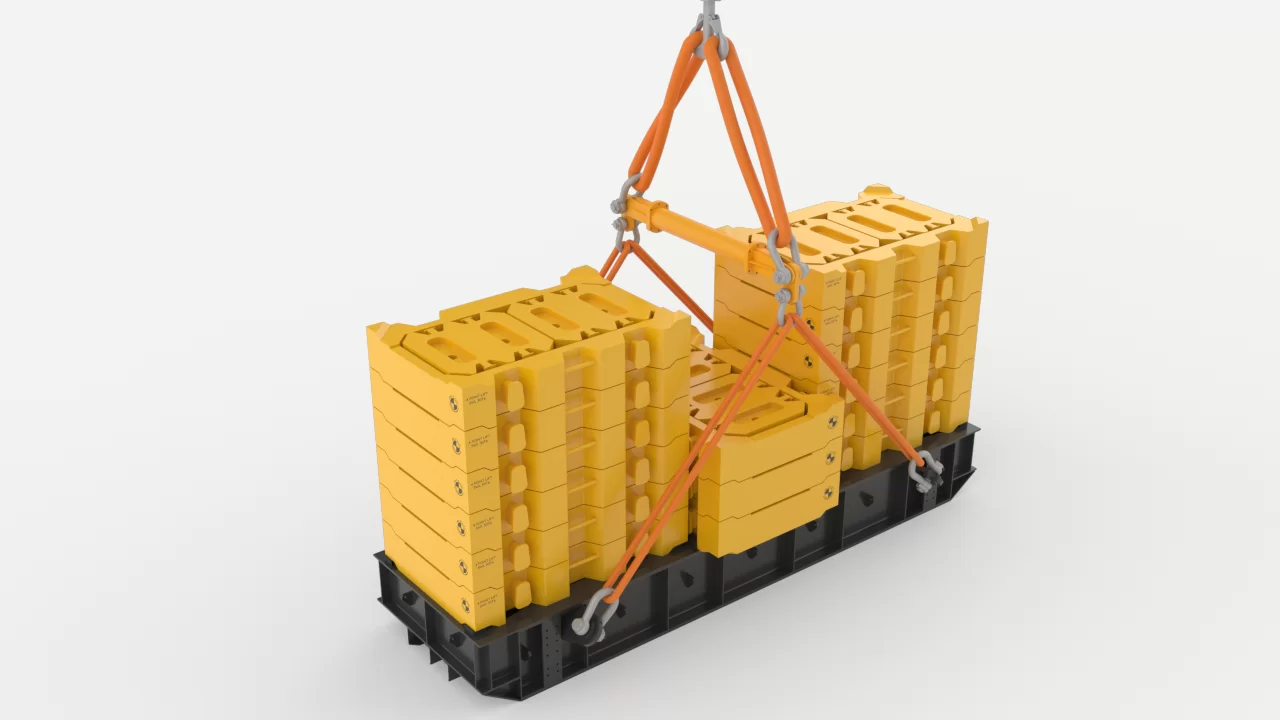
Up to 180Te
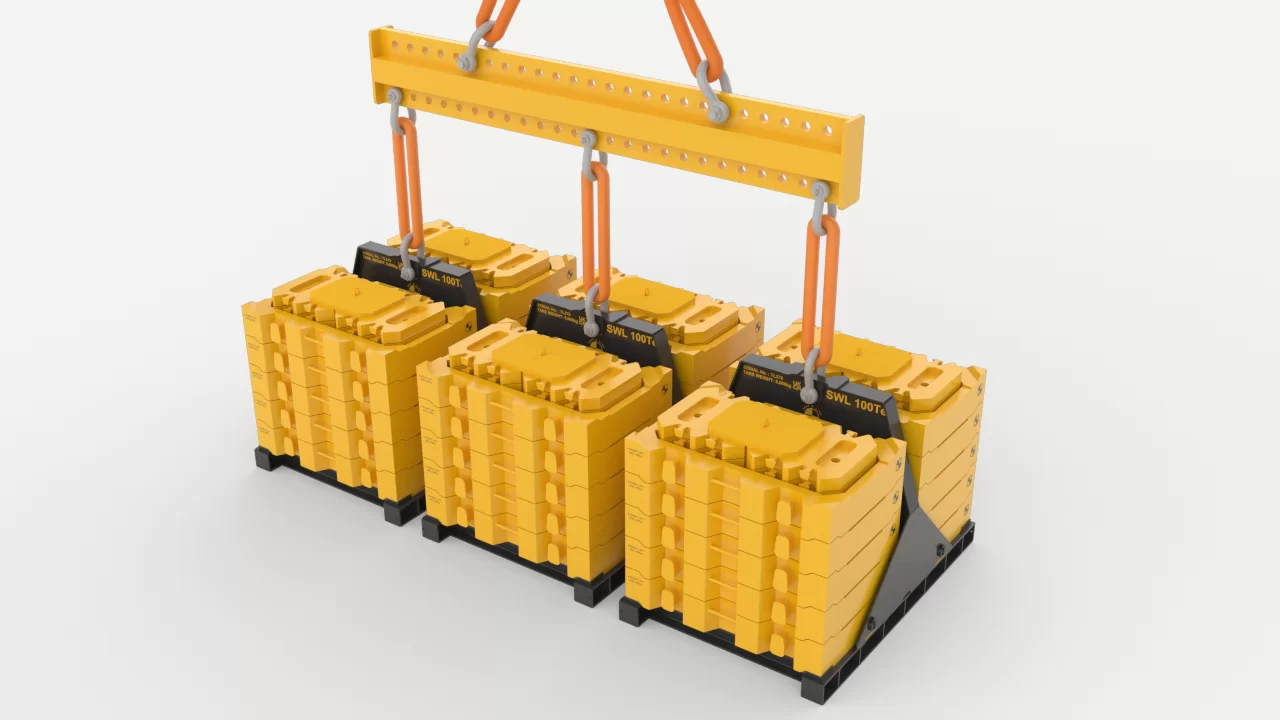
Up to 300Te
Documentation and certification
Every hire includes inspection certificates for the weights. Certified slings, shackles and all necessary rigging equipment can be supplied on request. The consistent, well -documented nature of the system means that drawings and lift plans can be produced for site use – something that is simply not possible with a collection of mixed repurposed blocks of varying sizes and unknown history.
What this means in practice
On site, the difference is immediately apparent. The weights arrive clearly marked, with known dimensions and known weights. They assemble quickly and securely without lashing. The lift points are accessible and rated for the loads involved. The centre of gravity can be adjusted if needed. The documentation is in order before the test begins.
For the lifting engineer or safety professional responsible for the test, that means less time rigging, less time worrying about whether the assembly is secure, and a cleaner documentation trail at the end of it. For the end client, it means a proof load test carried out to a proper standard with evidence to support it.
See the system in action
The gallery shows examples of our interlocking test weight system being used across a range of applications and sectors – from vessel crane proof load tests to UDL testing on a car ferry ramp.
Hire our test weight system
Tell us your required load, the equipment to be tested, your site location and preferred hire dates and we will come back to you with availability and a quotation.
Call us on 0191 432 9343, email hire@test-weights.co.uk or complete our enquiry form to discuss your requirements.